
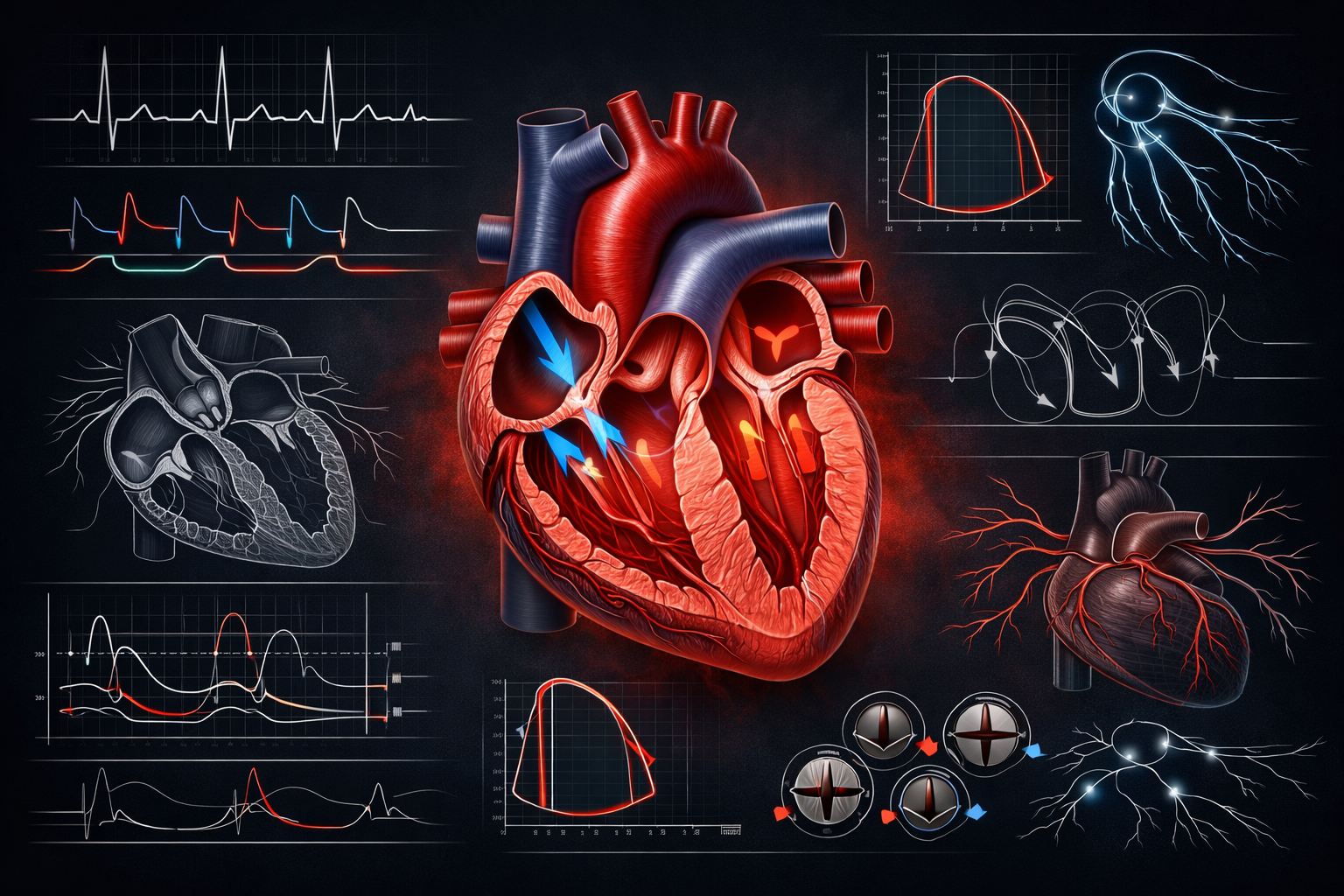
Estimated Read Time: 25 minutes | Target Exam: USMLE Step 1 & Step 2 CK | Level: Beginner to Advanced | Last Updated: 2026
Why Cardiology Dominates Your USMLE Score
There is no organ system on USMLE Step 1 or Step 2 CK that is tested more heavily, more consistently, or from more angles than cardiology. The NBME content outline allocates approximately 8–12% of Step 1 questions to the cardiovascular system — making it the single highest-yield organ system on the entire exam.
But raw percentage understates cardiology’s true impact. Here is what makes cardiology uniquely powerful for your score:
Cardiology questions test multiple disciplines simultaneously. A single vignette about a patient with aortic stenosis might require you to know: the pathophysiology of pressure-overload ventricular hypertrophy (pathology), the hemodynamic changes on physical exam (physiology), the ECG findings (clinical medicine), the pharmacological management (pharmacology), and the surgical indications (clinical decision-making). Get the cardiovascular foundation right and you’re answering five types of questions, not one.
Cardiology concepts recur across organ systems. Understanding the renin-angiotensin-aldosterone system isn’t just cardiology — it’s renal physiology, pharmacology (ACE inhibitors, ARBs, aldosterone antagonists), and endocrinology all at once. Mastering it once pays dividends across hundreds of questions.
Cardiology is the backbone of Step 2 CK. Heart failure, chest pain management, arrhythmias, valvular disease, and acute coronary syndromes are among the most heavily tested clinical management scenarios on Step 2 CK. The investment you make in cardiology during Step 1 prep compounds directly into Step 2 CK performance.
This guide gives you exactly what you need: real USMLE-style cardiology questions with detailed explanations, organized by the highest-yield cardiovascular topics, with the mechanisms, patterns, and clinical pearls that make cardiology one of the most score-generating subjects on the boards.
How NBME Writes Cardiology Questions: The Pattern You Must Recognize
Before diving into practice questions, understanding how the NBME constructs cardiology questions will fundamentally change how you approach them.
Pattern 1 — The Physical Exam Integration Question You are given a murmur description + auscultation location + radiation + dynamic changes with maneuvers and asked to identify the valve lesion. These questions require you to know not just the murmur characteristics but why each maneuver changes the murmur (the hemodynamic mechanism).
Pattern 2 — The Timeline Question A patient has an MI. At a specific time point — 6 hours, 24 hours, 4 days, 2 weeks, 6 weeks — the question asks what the pathological finding, complication, or ECG change would be. You must know the exact timeline of myocardial infarction changes cold.
Pattern 3 — The EKG Interpretation Question A rhythm strip or 12-lead ECG is described textually (or shown as an image on the real exam) and you must identify the arrhythmia and choose the appropriate management. These questions test your knowledge of the cardiac action potential and antiarrhythmic pharmacology simultaneously.
Pattern 4 — The Mechanism-to-Complication Question A patient has a cardiac condition, and you are asked to predict the downstream complication or the mechanism of a specific clinical finding. For example: “A patient with mitral stenosis develops hemoptysis — what is the mechanism?” This requires understanding the hemodynamic cascade, not just recognizing the diagnosis.
Pattern 5 — The Drug Selection Question Given a patient with multiple comorbidities, choose the most appropriate cardiac medication — accounting for contraindications, additional benefits, and mechanism of action. These questions reward students who understand pharmacology as clinical decision-making, not just fact lists.
All five patterns appear in the questions below.
USMLE Cardiology Practice Questions with Detailed Explanations
❤️ QUESTION 1 — Cardiac Action Potential & Arrhythmia Pharmacology
A 58-year-old man with a history of atrial fibrillation is brought to the ED with palpitations. His ECG shows an irregular wide-complex tachycardia with a ventricular rate of 200 bpm. BP is 88/52 mmHg. He has a known history of Wolff-Parkinson-White syndrome. The physician considers adenosine for rate control. Why is adenosine contraindicated in this patient?
A) Adenosine causes coronary vasospasm that can precipitate acute MI in WPW
B) Adenosine blocks the AV node but leaves the accessory pathway unaffected, potentially accelerating conduction and causing ventricular fibrillation
C) Adenosine prolongs the QT interval, increasing risk of torsades de pointes in WPW
D) Adenosine causes systemic hypotension that worsens the pre-existing hemodynamic compromise
E) Adenosine is ineffective in wide-complex tachycardias regardless of the underlying mechanism
✅ Correct Answer: B — Adenosine blocks the AV node but leaves the accessory pathway unaffected, potentially accelerating conduction and causing ventricular fibrillation
Detailed Explanation:
This is one of the most clinically important and most frequently tested arrhythmia questions on USMLE Step 2 CK — the dangerous interaction between AV nodal blocking agents and accessory pathways in Wolff-Parkinson-White syndrome.
Normal AV conduction in WPW: WPW is caused by an accessory conduction pathway (Bundle of Kent) that connects the atria to the ventricles, bypassing the AV node. In sinus rhythm, this creates the classic ECG findings: short PR interval (bypassing AV node delay) and a delta wave (pre-excitation of the ventricles via the accessory pathway before normal AV conduction arrives).
Why Atrial Fibrillation + WPW is uniquely dangerous: In AF, the atria are firing chaotically at 350–600 impulses per minute. In a normal heart, the AV node acts as a gatekeeper — its physiological refractoriness limits ventricular rate to 100–180 bpm. In WPW, the accessory pathway has a much shorter refractory period than the AV node and can conduct impulses at rates of 200–300+ bpm directly to the ventricles.
Why adenosine is lethal in this scenario: Adenosine blocks the AV node (its therapeutic mechanism for SVT). In WPW with AF, blocking the AV node does NOT slow things down — it removes any competition from the normal pathway, funneling ALL 350–600 AF impulses through the accessory pathway exclusively. The result: extremely rapid ventricular response (200–300+ bpm) → disorganized ventricular activation → ventricular fibrillation → cardiac arrest.
The same principle applies to other AV nodal blockers: verapamil, diltiazem, digoxin, and beta-blockers are ALL contraindicated in WPW with AF for the same reason.
Correct treatment for WPW with AF and hemodynamic instability (as in this patient with BP 88/52): Immediate synchronized cardioversion — the patient is unstable.
For stable WPW with AF: Procainamide (Class IA) or ibutilide — these drugs block the accessory pathway directly. Flecainide or propafenone (Class IC) are also used.
WPW Management Quick Reference:
| Scenario | Treatment | Avoid |
|---|---|---|
| WPW + SVT (narrow complex, stable) | Adenosine is acceptable (retrograde through AV node) | — |
| WPW + AF (wide complex, stable) | Procainamide, ibutilide, cardioversion | Adenosine, verapamil, diltiazem, digoxin, beta-blockers |
| WPW + AF (unstable) | Immediate synchronized cardioversion | All AV nodal blockers |
USMLE Pearl: Any time you see WPW + AF + wide complex tachycardia → instinctively eliminate all AV nodal blockers from the answer choices. Cardioversion if unstable; procainamide if stable.
❤️ QUESTION 2 — Valvular Heart Disease: Physical Exam Mastery
A 67-year-old man presents for evaluation of a murmur. On exam, his carotid upstroke is brisk and bifid (double impulse). He has a systolic ejection murmur at the left sternal border that increases with standing and decreases with squatting. His ECG shows left ventricular hypertrophy. Echo reveals asymmetric septal hypertrophy with a resting LVOT gradient of 45 mmHg and systolic anterior motion of the mitral valve. Which of the following statements about the management of this condition is correct?
A) Nitrates are first-line treatment to relieve chest pain and reduce preload
B) Diuretics should be maximized to treat the left ventricular hypertrophy
C) Beta-blockers reduce the LVOT gradient by decreasing heart rate and contractility
D) Surgical myomectomy is indicated for all symptomatic patients regardless of gradient
E) ACE inhibitors are preferred to reduce afterload and improve cardiac output
✅ Correct Answer: C — Beta-blockers reduce the LVOT gradient by decreasing heart rate and contractility
Detailed Explanation:
This is Hypertrophic Obstructive Cardiomyopathy (HOCM) — the most common cause of sudden cardiac death in young athletes and one of the most concept-rich cardiology topics on the USMLE.
Confirming the Diagnosis from the Clues:
- Bisferiens (brisk and bifid) carotid pulse — two systolic impulses: first from initial rapid ejection, second after LVOT obstruction momentarily clears
- Systolic ejection murmur at LLSB that increases with standing and decreases with squatting — the defining dynamic feature of HOCM
- Asymmetric septal hypertrophy + LVOT gradient + SAM of mitral valve on echo = HOCM confirmed
Why beta-blockers work: HOCM obstruction is dynamic — it worsens when the LV cavity becomes smaller (less blood filling = narrower LVOT). Beta-blockers work through two mechanisms:
- Decrease heart rate → longer diastolic filling time → larger LV end-diastolic volume → wider LVOT → less obstruction
- Decrease contractility (negative inotropy) → less forceful systolic ejection → less SAM → less LVOT obstruction
Beta-blockers (metoprolol, atenolol, propranolol) are first-line medical therapy for symptomatic HOCM. Non-dihydropyridine CCBs (verapamil, diltiazem) are second-line alternatives.
Why the other choices are wrong — and critically dangerous:
- A (Nitrates): CONTRAINDICATED — Nitrates decrease preload → smaller LV → worsens LVOT obstruction → can cause sudden collapse. This is the most commonly tested dangerous error in HOCM.
- B (Diuretics): RELATIVELY CONTRAINDICATED — Same mechanism as nitrates; reduce preload → smaller LV → worse obstruction. Patients with HOCM rely on adequate preload to maintain LVOT patency.
- D (Surgery for all): Septal myectomy (Morrow procedure) or alcohol septal ablation is reserved for patients with: (a) severe symptoms despite maximal medical therapy AND (b) resting or provoked gradient ≥ 50 mmHg.
- E (ACE inhibitors): CONTRAINDICATED — Reduce afterload → decrease LV size (smaller cavity) → worsen obstruction.
The Golden HOCM Management Rule: In HOCM, anything that decreases preload OR afterload OR increases heart rate OR increases contractility worsens obstruction. Medical therapy aims to do the opposite.
Agents that WORSEN HOCM obstruction (never use):
- Nitrates, diuretics (reduce preload)
- ACE inhibitors, ARBs (reduce afterload)
- Digoxin, dobutamine (increase contractility)
- Vasodilators of any kind
❤️ QUESTION 3 — Myocardial Infarction: Pathology Timeline
A 62-year-old man with ST-elevation MI of the left anterior descending territory dies 18 hours after the onset of chest pain. Autopsy is performed. Which of the following best describes the expected gross and histological findings at the site of infarction at this time point?
A) Pale, firm area with coagulative necrosis; ghost cells visible, no nuclei present
B) Gross appearance normal or slightly pale; histology shows early wavy fiber change and hypereosinophilic myocytes
C) Yellow-white softened area; extensive neutrophilic infiltration and karyolytic debris
D) White scar tissue with fibroblast proliferation replacing necrotic myocytes
E) Dark red hemorrhagic area with extensive macrophage infiltration and granulation tissue
✅ Correct Answer: B — Gross appearance normal or slightly pale; histology shows early wavy fiber change and hypereosinophilic myocytes
Detailed Explanation:
The MI timeline is one of the most precisely tested topics on Step 1. The NBME gives you a time point and asks what you would see — both grossly and microscopically. You must know this table cold.
The Complete MI Timeline:
| Time | Gross Appearance | Histology | Key Finding |
|---|---|---|---|
| 0–4 hours | Normal (no gross change yet) | Normal or wavy fiber change | Earliest change: Reversible injury; ATP depletion |
| 4–12 hours | Slight pallor may begin | Coagulative necrosis begins; hypereosinophilic myocytes; loss of nuclei (pyknosis → karyolysis); wavy fiber change | Earliest IRREVERSIBLE injury markers |
| 12–24 hours | Pallor established | Wavy fibers, hypereosinophilia, early neutrophil infiltration begins at periphery | This question = 18 hours → early neutrophil arrival |
| 1–3 days | Pallor, slightly soft | Peak neutrophilic infiltration — “yellow” center from pus-like necrotic debris | Risk of arrhythmia highest |
| 3–7 days | Soft, yellow-white center | Neutrophils dying; early macrophage arrival | HIGHEST RISK of mechanical complications (free wall rupture, VSD, papillary muscle rupture) |
| 1–2 weeks | Soft, depressed area | Macrophages + granulation tissue (angiogenesis, fibroblasts begin laying collagen) | Healing begins |
| 2–8 weeks | Firm, pale | Progressive fibrosis — Type III collagen → Type I collagen | Scar forming |
| >8 weeks | Dense white scar | Mature fibrotic scar — Type I collagen predominates | Complete scar |
At 18 hours: The gross appearance is at the transition — slight pallor may be beginning, but the classic pale/firm appearance of coagulative necrosis hasn’t fully developed. Histologically, you see hypereosinophilic myocytes (cytoplasm becomes brightly pink due to protein denaturation), loss of nuclei, and wavy fiber change (myocytes stretched and buckled by downstream contraction of viable myocytes). Early neutrophil infiltration is just beginning at the edges.
Why the other choices are wrong:
- A (Pale, firm, ghost cells): This is more characteristic of day 2–3 when coagulative necrosis is fully established
- C (Yellow-white, extensive neutrophils): Days 1–3 — peak neutrophil response
- D (White scar, fibroblasts): Weeks 2–8 — remodeling phase
- E (Hemorrhagic, macrophages, granulation tissue): 1–2 weeks — granulation tissue phase
Clinical Correlations:
- Troponin rises at 4–6 hours, peaks at 24–48 hours, stays elevated for 7–10 days (most sensitive and specific marker)
- CK-MB rises at 4–6 hours, peaks at 24 hours, normalizes by 48–72 hours (useful for detecting reinfarction)
- Arrhythmias most common in first 24–48 hours (ischemia disrupts ion channels)
- Mechanical complications most common at days 3–7 (neutrophil collagenase weakens myocardium)
- Dressler syndrome (autoimmune pericarditis) occurs weeks to months later
❤️ QUESTION 4 — Heart Failure: Pathophysiology & Pharmacology
A 71-year-old woman with longstanding hypertension presents with progressive dyspnea on exertion, orthopnea, and bilateral ankle edema. Echocardiography shows an ejection fraction of 62%, concentric left ventricular hypertrophy, and impaired diastolic filling (E/A ratio < 1). BNP is elevated at 480 pg/mL. Which of the following best explains the elevated BNP in this patient despite a preserved ejection fraction?
A) BNP is only elevated in systolic dysfunction and its elevation is likely a laboratory error
B) Elevated filling pressures from diastolic dysfunction stretch the ventricular wall, stimulating BNP release
C) BNP is released by hypertrophied myocytes independent of filling pressure
D) Elevated BNP reflects renal failure causing impaired BNP clearance rather than cardiac pathology
E) BNP elevation is caused by the patient’s hypertension directly stimulating the RAAS
✅ Correct Answer: B — Elevated filling pressures from diastolic dysfunction stretch the ventricular wall, stimulating BNP release
Detailed Explanation:
This is Heart Failure with Preserved Ejection Fraction (HFpEF) — the form of heart failure that Step 1 and Step 2 CK increasingly test because it requires conceptual understanding, not just memorization.
What is HFpEF? HFpEF (EF ≥ 50%) occurs when the ventricle is stiff and cannot relax normally during diastole. Despite a normal EF (systolic function is intact), the heart cannot fill adequately → elevated filling pressures → pulmonary congestion → dyspnea.
Classic HFpEF patient: Older woman, hypertension (most important risk factor), diabetes, obesity, atrial fibrillation. LVH from chronic pressure overload → diastolic dysfunction.
Why BNP is elevated in HFpEF: BNP (B-type natriuretic peptide) is synthesized and released by ventricular myocytes in response to wall stretch — specifically stretch caused by elevated ventricular filling pressures (elevated LVEDP). In HFpEF, the stiff ventricle resists filling → elevated LVEDP even with normal EF → myocytes are stretched → BNP is released. The mechanism of BNP release is filling pressure and wall stretch, NOT ejection fraction per se.
BNP Clinical Pearls:
- BNP > 100 pg/mL: strongly suggests heart failure as cause of dyspnea
- BNP < 100 pg/mL: heart failure very unlikely as cause of dyspnea (excellent NPV)
- BNP is elevated in BOTH HFrEF and HFpEF
- BNP is falsely low in obesity (adipose tissue metabolizes it)
- BNP is falsely high in renal failure (reduced clearance)
HFpEF vs. HFrEF Comparison:
| Feature | HFpEF | HFrEF |
|---|---|---|
| EF | ≥ 50% (preserved) | < 40% (reduced) |
| Mechanism | Diastolic dysfunction — impaired relaxation | Systolic dysfunction — impaired contraction |
| LV appearance | Concentric hypertrophy (thick, normal cavity) | Eccentric dilation (thin walls, enlarged cavity) |
| Primary cause | Hypertension, aging, diabetes | CAD, MI, dilated cardiomyopathy |
| Mortality-reducing drugs | None well-established (SGLT-2 inhibitors show promise) | ACEi/ARB/ARNI + Beta-blocker + Aldosterone antagonist + SGLT-2 inhibitor |
| BNP | Elevated | Elevated |
Why the other choices are wrong:
- A: BNP is elevated in BOTH systolic AND diastolic dysfunction — this is a common misconception
- C: BNP release is primarily driven by wall stretch from elevated filling pressures, not just myocyte hypertrophy per se
- D: Renal failure does affect BNP clearance, but this is a patient with classic HFpEF symptoms and elevated BNP — the primary explanation is cardiac
- E: Hypertension stimulates the RAAS → aldosterone → sodium retention → volume overload — but BNP is specifically released in response to myocardial wall stretch, not RAAS directly
❤️ QUESTION 5 — Antiarrhythmic Pharmacology: Class IA, IB, IC
A 54-year-old man with no structural heart disease has symptomatic paroxysmal atrial fibrillation. He has been cardioverted to sinus rhythm and now needs long-term rhythm-control therapy to maintain sinus rhythm. His physician prescribes flecainide. One week later, he develops a slow, wide-complex tachycardia at 150 bpm that is hemodynamically stable. What is the most likely explanation for this arrhythmia?
A) Flecainide caused hypokalemia, triggering early afterdepolarizations
B) Flecainide’s sodium channel blockade converted atrial flutter with a slower atrial rate, allowing 1:1 AV conduction
C) Flecainide prolonged the QT interval, causing torsades de pointes
D) Flecainide’s vagolytic effect accelerated AV nodal conduction
E) Flecainide crossed the blood-brain barrier, causing a central nervous system arrhythmia
✅ Correct Answer: B — Flecainide’s sodium channel blockade converted atrial flutter with a slower atrial rate, allowing 1:1 AV conduction
Detailed Explanation:
This is the “flecainide flutter” phenomenon — a high-yield, heavily tested pharmacological complication that is elegant and counter-intuitive.
The Mechanism — Step by Step:
- Patient has paroxysmal AF (atrial rate ~350–600 bpm, irregular)
- Flecainide (Class IC — pure sodium channel blocker) is given to maintain sinus rhythm
- Flecainide slows conduction throughout the atria — the atrial rate DECREASES
- AF (350–600 bpm, irregular) converts to atrial flutter (~200–240 bpm, regular) because the slowed conduction velocity allows a stable, organized re-entrant flutter circuit to form
- Atrial flutter at 200–240 bpm is now being conducted to the ventricles
- Flecainide also has some vagolytic properties and the slowed flutter rate may allow 1:1 AV conduction (in contrast to typical flutter where 2:1 block limits ventricular rate to ~150 bpm)
- Result: ventricular rate of 200–240 bpm, WIDE complex (flecainide also slows ventricular conduction) — a wide-complex tachycardia that can cause hemodynamic collapse
Why this matters clinically: This is WHY flecainide and other Class IC drugs (propafenone) must be combined with an AV nodal blocking agent (beta-blocker or non-DHP CCB) when used for AF rhythm control — to prevent 1:1 conduction if flutter develops.
Additionally, Class IC drugs are absolutely contraindicated in patients with structural heart disease (especially post-MI or cardiomyopathy). The CAST trial (Cardiac Arrhythmia Suppression Trial) demonstrated that in patients with structural heart disease, IC agents increased mortality despite successfully suppressing arrhythmias.
Antiarrhythmic Drug Classes — Vaughan-Williams Classification:
| Class | Mechanism | Key Drugs | Use | Major Toxicity |
|---|---|---|---|---|
| IA | Na+ channel block (intermediate) + K+ block | Quinidine, Procainamide, Disopyramide | AF, VT | QT prolongation → TdP; Quinidine → cinchonism; Procainamide → drug-induced lupus |
| IB | Na+ channel block (fast on/off) | Lidocaine, Mexiletine | VT/VF (especially post-MI) | CNS toxicity (lidocaine); works BEST in ischemic tissue |
| IC | Na+ channel block (slow on/off) | Flecainide, Propafenone | AF/flutter (NO structural heart disease) | Flutter with 1:1 AV conduction; CONTRAINDICATED in structural heart disease |
| II | Beta-blocker (reduce automaticity) | Metoprolol, Atenolol, Esmolol | AF rate control, SVT, post-MI | Bronchospasm, bradycardia, hypoglycemia masking |
| III | K+ channel block (prolong repolarization) | Amiodarone, Sotalol, Ibutilide, Dofetilide | AF/flutter, VT | QT prolongation → TdP (sotalol); Amiodarone: pulmonary fibrosis, thyroid, corneal deposits |
| IV | Ca2+ channel block (non-DHP) | Verapamil, Diltiazem | AF rate control, SVT | AV block, negative inotropy; AVOID in HFrEF and WPW |
Memory Tool for Class IA toxicities:
- Quinidine → QT prolongation, Cinchonism (tinnitus, headache), thrombocytopenia
- Procainamide → drug-induced Lupus (anti-histone antibodies), agranulocytosis
- Disopyramide → most anticholinergic (urinary retention, dry mouth, constipation)
❤️ QUESTION 6 — Congenital Heart Disease: Cyanotic vs. Acyanotic
A newborn girl is noted to have cyanosis at birth that does not improve with 100% oxygen administration (hyperoxia test remains positive for hypoxia). Echo shows the aorta arising from the right ventricle and the pulmonary artery arising from the left ventricle, with an intact interventricular septum. Which of the following is the immediate treatment to maintain systemic oxygenation while surgical repair is planned?
A) Indomethacin to close the ductus arteriosus
B) Furosemide to reduce pulmonary blood flow
C) Prostaglandin E1 to maintain ductal patency
D) 100% oxygen to promote pulmonary vasodilation
E) Digoxin to improve cardiac output
✅ Correct Answer: C — Prostaglandin E1 to maintain ductal patency
Detailed Explanation:
This is Dextro-Transposition of the Great Arteries (D-TGA) — the most common cyanotic congenital heart defect presenting in the neonatal period and one of the most testable CHD diagnoses on USMLE.
The Anatomy and Why it’s Lethal: In D-TGA, the aorta arises from the RIGHT ventricle and the pulmonary artery arises from the LEFT ventricle. The systemic and pulmonary circulations are running in parallel rather than in series:
- Deoxygenated blood: RV → Aorta → body → SVC/IVC → RA → RV (loops in the systemic circulation forever — never gets oxygenated)
- Oxygenated blood: LV → Pulmonary artery → lungs → pulmonary veins → LA → LV (loops in the pulmonary circulation forever — never reaches the body)
Without any mixing, this is incompatible with life. The only way to survive is if there’s a connection allowing some mixing — a VSD, ASD, or most critically, a patent ductus arteriosus (PDA).
Why PGE1 (Prostaglandin E1): The ductus arteriosus is the only mixing point keeping this baby alive. PGE1 (alprostadil) keeps the ductus open by stimulating EP receptors in ductal smooth muscle, preventing constriction. This allows some oxygenated blood to cross from the pulmonary to systemic circulation (and vice versa), maintaining adequate systemic oxygenation until surgical repair.
Definitive treatment: Arterial Switch Operation (Jatene procedure) — performed within the first 2 weeks of life while the LV is still conditioned to work as the systemic pump.
Why oxygen doesn’t work: In TGA, the hypoxia is due to mixing failure, not pulmonary disease. 100% O2 improves oxygenation in pulmonary causes (V/Q mismatch) but cannot overcome the fundamental anatomical parallel circuit problem.
Cyanotic vs. Acyanotic CHD:
| Defect | Type | Key Feature | Mnemonic |
|---|---|---|---|
| Tetralogy of Fallot | Cyanotic | Boot-shaped heart; RVH + VSD + RVOTO + overriding aorta | “Tet = T4 defects” |
| D-TGA | Cyanotic | Egg-on-a-string CXR (narrow mediastinum); parallel circuits | Most common cyanotic CHD in neonates |
| Truncus Arteriosus | Cyanotic | Single vessel from both ventricles | 22q11 deletion (DiGeorge) |
| TAPVR | Cyanotic | Pulmonary veins drain to RA, not LA | Snowman CXR |
| Tricuspid Atresia | Cyanotic | Absent tricuspid, requires ASD + VSD for survival | — |
| VSD | Acyanotic | Most common CHD overall; holosystolic murmur LLSB | Can → Eisenmenger |
| ASD | Acyanotic | Fixed split S2; secundum most common | May cause paradoxical embolism |
| PDA | Acyanotic | Continuous “machinery” murmur; preterm infants | Close with indomethacin |
| Coarctation of Aorta | Acyanotic | HTN in arms, low BP in legs; rib notching | Associated with bicuspid AoV and Turner syndrome |
The 5 T’s of Cyanotic CHD: Tetralogy of Fallot, Truncus arteriosus, Transposition (TGA), Tricuspid atresia, Total anomalous pulmonary venous return (TAPVR)
❤️ QUESTION 7 — Coronary Artery Disease & Stable Angina
A 58-year-old man with known CAD presents with predictable chest pain that occurs after walking two blocks uphill. The pain is relieved within 5 minutes by rest. He currently takes aspirin, a statin, and a beta-blocker. His resting ECG is normal. Exercise stress testing shows 2 mm ST-segment depression in the lateral leads at peak exercise with chest pain, normalizing at rest. What is the mechanism of his ST changes during exercise?
A) Plaque rupture with superimposed thrombus formation
B) Coronary vasospasm from sympathetic stimulation during exercise
C) Subendocardial ischemia from demand exceeding supply in a stenosed coronary territory
D) Left ventricular hypertrophy causing ST changes unrelated to ischemia
E) Hyperventilation-induced respiratory alkalosis causing coronary vasoconstriction
✅ Correct Answer: C — Subendocardial ischemia from demand exceeding supply in a stenosed coronary territory
Detailed Explanation:
This is stable angina — the most classic presentation of obstructive coronary artery disease. This question tests the pathophysiology of exercise-induced ST changes.
The Ischemic Cascade: In stable angina, a fixed atherosclerotic plaque partially occludes a coronary artery. At rest, the narrowing is not severe enough to limit flow (coronary reserve compensates). During exercise:
- Increased myocardial oxygen demand (increased HR, contractility, wall stress from increased BP)
- Fixed stenosis limits the ability to increase flow proportionally
- Supply < Demand → ischemia
- Ischemia affects the subendocardium first (the deepest myocardial layer is furthest from epicardial coronary supply, has the highest oxygen demand, and is exposed to the highest compression forces during systole)
- Subendocardial ischemia → abnormal repolarization → ST-segment depression on ECG (ST depression = subendocardial ischemia)
Why ST depression (not elevation) in stable angina?
- ST elevation = transmural ischemia/infarction (full thickness of myocardial wall) — this is STEMI
- ST depression = subendocardial ischemia (inner third of myocardial wall) — this is stable angina, NSTEMI, and demand ischemia
Why symptoms resolve with rest? Rest reduces myocardial oxygen demand → supply-demand balance is restored → ischemia resolves → ST changes normalize → pain goes away. This predictability (same level of exertion triggers symptoms) is the defining feature of stable (stable plaque, fixed stenosis) vs. unstable angina (plaque rupture, unpredictable onset).
Stable vs. Unstable Angina vs. NSTEMI:
| Feature | Stable Angina | Unstable Angina | NSTEMI |
|---|---|---|---|
| Trigger | Predictable exertion | Rest or minimal exertion | Rest or minimal exertion |
| ECG | ST depression with exercise, normalizes at rest | ST depression or T-wave changes at rest | ST depression or T-wave changes at rest |
| Troponin | Normal | Normal | Elevated |
| Mechanism | Fixed stenosis, demand ischemia | Plaque rupture, partial thrombus | Plaque rupture, partial thrombus, subendocardial necrosis |
| Treatment | Beta-blockers, nitrates, aspirin, statin, revascularization if refractory | Anticoagulation + antiplatelet + early revascularization | Same as UA + troponin monitoring |
❤️ QUESTION 8 — Pericardial Disease
A 28-year-old man presents with 3 days of sharp substernal chest pain that worsens with lying flat and improves when leaning forward. He had a febrile illness 2 weeks ago. His ECG shows diffuse ST elevation in all leads except aVR and V1 (which show reciprocal PR elevation), with PR depression in II, III, aVF, and lateral leads. His echo shows a small pericardial effusion. Which of the following is the most appropriate initial management?
A) Aspirin 325 mg + ibuprofen 600 mg TID + colchicine 0.5 mg BID for 3 months
B) Aspirin 650 mg TID + colchicine 0.5 mg BID for 3 months
C) Prednisone 1 mg/kg/day for 4 weeks
D) Pericardiocentesis to relieve the effusion
E) IV ceftriaxone for presumed bacterial pericarditis
✅ Correct Answer: B — Aspirin 650 mg TID + colchicine 0.5 mg BID for 3 months
Detailed Explanation:
This is acute viral pericarditis — most commonly caused by Coxsackievirus B, echovirus, or other enteroviruses in young patients following a viral upper respiratory illness.
Diagnosis Confirmed By:
- Sharp chest pain worse supine, better leaning forward (pericardium inflamed → friction between pericardial layers less when leaning forward)
- Pericardial friction rub (not mentioned here but classic on exam)
- PR depression (most specific ECG finding for pericarditis — atrial involvement with injury current)
- Diffuse ST elevation (all leads except aVR and V1 — unlike MI which is territory-specific) with saddle-shaped morphology
ECG: Pericarditis vs. MI — Critical Distinction:
| Feature | Pericarditis | MI (STEMI) |
|---|---|---|
| ST elevation distribution | Diffuse (all leads) | Localized (specific territory) |
| PR changes | PR depression (most specific) | No PR changes |
| Reciprocal changes | None | Present (opposite territory) |
| ST morphology | Concave upward (“saddle-shaped”) | Convex upward (“tombstone”) |
| Q waves | Absent | Develop over hours-days |
| Evolution | All leads evolve together | Territory-specific evolution |
Treatment — COPE/ICAP Trial Evidence: The cornerstone of acute pericarditis treatment is:
- NSAIDs (aspirin or ibuprofen) — high-dose, with food. Aspirin preferred in patients with CAD (added antiplatelet benefit)
- Colchicine — add to NSAIDs for ALL first-episode acute pericarditis. The COPE trial showed colchicine + NSAIDs vs. NSAIDs alone: colchicine reduced recurrence rate from 32% to 11% and improved symptom response at 72 hours. Duration: 3 months
Why NOT corticosteroids (Choice C): Corticosteroids are associated with increased risk of recurrence in pericarditis — they suppress inflammation but impair the immune clearance of the causative virus, making the pericardium susceptible to relapsing disease. Steroids are reserved for: pericarditis refractory to NSAIDs + colchicine, specific etiologies (autoimmune, uremic), or patients with NSAIDs contraindications.
Why NOT pericardiocentesis (Choice D): Small pericardial effusions in acute pericarditis do not require drainage. Pericardiocentesis is indicated for cardiac tamponade (hemodynamic compromise — Beck’s triad: hypotension, JVD, muffled heart sounds) or large symptomatic effusions. This patient has a small effusion and is hemodynamically stable.
Pericarditis Recurrence:
- Recurrence rate without colchicine: ~30%
- With colchicine: ~11%
- Treatment of recurrent pericarditis: colchicine (longer duration) + NSAIDs; consider IL-1 antagonist (anakinra) for colchicine-resistant recurrent pericarditis
❤️ QUESTION 9 — Cardiac Tamponade vs. Constrictive Pericarditis
A 65-year-old man with a history of radiation therapy for lung cancer 8 years ago presents with progressive dyspnea, peripheral edema, and ascites out of proportion to edema. On exam: JVP is elevated and paradoxically RISES with inspiration (Kussmaul’s sign). Heart sounds are distant. There is no pulsus paradoxus. Chest X-ray shows a calcified pericardium. Echo shows pericardial thickening without significant effusion, with “septal bounce” on inspiration. What is the most likely diagnosis and its distinguishing feature from cardiac tamponade?
A) Cardiac tamponade — distinguished by the presence of pulsus paradoxus
B) Constrictive pericarditis — distinguished by Kussmaul’s sign and its ABSENCE rather than presence of pulsus paradoxus
C) Restrictive cardiomyopathy — distinguished by normal pericardial thickness
D) Right heart failure from radiation pneumonitis — distinguished by elevated RVSP
E) Superior vena cava syndrome — distinguished by facial and arm edema
✅ Correct Answer: B — Constrictive pericarditis — distinguished by Kussmaul’s sign and its ABSENCE (or attenuation) of pulsus paradoxus
Detailed Explanation:
Constrictive Pericarditis vs. Cardiac Tamponade is one of the most elegantly tested distinctions in cardiology — it requires understanding the hemodynamics of each condition at a deep mechanistic level.
Both conditions cause:
- Elevated JVP
- Reduced cardiac output
- Peripheral edema/ascites (right heart congestion)
- Dyspnea
The Critical Distinctions:
| Feature | Cardiac Tamponade | Constrictive Pericarditis |
|---|---|---|
| Mechanism | Fluid compresses heart from outside | Scarred, rigid pericardium restricts filling |
| Pulsus paradoxus | Present (>10 mmHg drop in SBP with inspiration) | Absent (or minimal) |
| Kussmaul’s sign | Absent (JVP falls with inspiration, as expected) | Present (JVP paradoxically rises with inspiration) |
| Heart sounds | Distant/muffled (fluid insulates) | May be distant |
| CXR | Enlarged cardiac silhouette (“water bottle heart”) | Calcified pericardium |
| Echo | Pericardial effusion, right heart collapse in diastole | Pericardial thickening, septal bounce |
| Equalization of pressures | Present (all 4 chamber pressures equalize) | Present (all 4 chamber pressures equalize — “square root sign” on cardiac cath) |
| Treatment | Pericardiocentesis (emergency if tamponade) | Pericardiectomy (surgical stripping) |
Why Kussmaul’s sign occurs in constriction but NOT tamponade:
- In constriction, the pericardium is rigid (like a hard shell). With inspiration, normally the right heart fills more (increased venous return) and the interventricular septum shifts slightly left. With a rigid pericardium, this leftward shift can’t occur — the RV filling causes the septum to bulge into the LV (“septal bounce”) and JVP rises because the rigid shell can’t accommodate the increased venous return.
- In tamponade, the fluid surrounds the heart equally — there IS increased filling with inspiration that slightly reduces the fluid pressure, so JVP actually falls (or stays the same) with inspiration.
Why pulsus paradoxus in tamponade but NOT constrictive pericarditis: In tamponade, inspiration → increased RV filling → RV expands → septum bulges into LV → decreased LV filling → decreased LV stroke volume → decreased systolic BP. This interdependence is exaggerated in tamponade because the total cardiac volume is fixed by surrounding fluid. In constrictive pericarditis, the fixed pericardial shell equally restricts ALL chambers — ventricular interdependence is less pronounced → minimal or absent pulsus paradoxus.
This patient:
- Radiation → constrictive pericarditis (classic cause — also TB, viral, post-cardiac surgery)
- Calcified pericardium on CXR
- Kussmaul’s sign
- No pulsus paradoxus
- Septal bounce on echo
- Treatment: surgical pericardiectomy
❤️ QUESTION 10 — Peripheral Vascular Disease & Aortic Pathology
A 68-year-old man with a 40-pack-year smoking history presents for a routine physical exam. He is completely asymptomatic. An abdominal ultrasound obtained for renal evaluation incidentally reveals a 5.8 cm infrarenal abdominal aortic aneurysm. His blood pressure is well-controlled at 128/76 mmHg on lisinopril. What is the most appropriate management?
A) Aggressive BP control with beta-blockers and reassurance — surgery only if symptomatic
B) Urgent endovascular aortic repair (EVAR) or open surgical repair
C) Repeat ultrasound in 6 months to evaluate for growth
D) CT angiography to better characterize the aneurysm, then endovascular or open repair
E) Statin therapy to stabilize the aneurysm and prevent rupture
✅ Correct Answer: D — CT angiography to better characterize the aneurysm, then endovascular or open repair
Detailed Explanation:
Abdominal Aortic Aneurysm (AAA) management is based on size and the risk of rupture vs. the risk of repair.
AAA Size Thresholds (US Guidelines):
| Size | Management |
|---|---|
| < 3.0 cm | Not an aneurysm (normal) |
| 3.0–3.9 cm | Surveillance ultrasound every 3 years |
| 4.0–4.9 cm | Surveillance ultrasound every 12 months |
| 5.0–5.4 cm | Surveillance every 6 months; consider repair in high-surgical-risk settings |
| ≥ 5.5 cm (men) | Elective surgical repair indicated |
| ≥ 5.0 cm (women) | Elective surgical repair often recommended (higher rupture risk per cm) |
| Any size, symptomatic or rapidly enlarging (>1 cm/year or >0.5 cm in 6 months) | Urgent repair |
This patient has a 5.8 cm AAA → Meets criteria for elective repair.
Why CT angiography first (Choice D): Before repair, CT angiography (CTA) provides detailed anatomical information needed to plan the approach:
- Exact aneurysm dimensions and morphology
- Relationship to renal arteries (important for EVAR planning)
- Iliac artery anatomy (needed for endovascular approach)
- Presence of thrombus or accessory renal arteries
Then the patient undergoes either:
- EVAR (Endovascular Aortic Repair): Preferred in high surgical risk patients; lower 30-day mortality than open; higher re-intervention rate long-term
- Open surgical repair: Preferred in younger, lower-risk patients with anatomy not suitable for EVAR; more durable long-term
Why NOT choice C (repeat ultrasound in 6 months): At 5.8 cm, this aneurysm has already exceeded the 5.5 cm threshold for elective repair. Continuing surveillance without repair is below standard of care. Annual rupture risk at 5.5–6.0 cm is approximately 10–20%.
AAA Risk Factors: Male sex, smoking (most modifiable risk factor), age > 65, family history, hypertension, atherosclerosis
AAA Screening Recommendations: US Preventive Services Task Force (USPSTF) recommends one-time abdominal ultrasound screening for all men aged 65–75 who have ever smoked (≥ 100 cigarettes lifetime). Women who have never smoked are NOT recommended for routine screening.
❤️ QUESTION 11 — Cardiac Physiology: Pressure-Volume Loops
A 45-year-old man has chronic aortic regurgitation from infective endocarditis. Which of the following changes on a left ventricular pressure-volume (PV) loop would be most consistent with his condition?
A) Increased systolic pressure, decreased stroke volume, and decreased LV end-diastolic volume
B) Increased LV end-diastolic volume, increased stroke volume, and leftward shift of the loop
C) Decreased LV compliance causing a steep increase in diastolic pressure with small increases in volume
D) Increased LV end-diastolic volume, increased stroke volume, and rightward shift of the loop
E) Decreased LV end-diastolic volume with increased ejection fraction due to reduced afterload
✅ Correct Answer: D — Increased LV end-diastolic volume, increased stroke volume, and rightward shift of the loop
Detailed Explanation:
Pressure-Volume loop questions are among the most conceptually demanding on Step 1. Understanding them requires knowing the four phases of the cardiac cycle and how each disease state alters the loop.
Normal PV Loop Phases:
- Mitral valve opens (point A) → passive filling → LV fills with blood → LVEDV increases
- Isovolumetric contraction (A→B) → both valves closed → LV pressure rises with no change in volume (vertical line on right side)
- Aortic valve opens (point B) → systole → blood ejected → LV volume decreases → LVESV
- Isovolumetric relaxation (C→D) → both valves closed again → LV pressure falls with no change in volume (vertical line on left side)
- Stroke volume = LVEDV – LVESV (the width of the loop)
Aortic Regurgitation Changes: In AR, the aortic valve leaks blood BACK into the LV during diastole. This causes:
- Volume overload → LV receives normal preload from pulmonary veins PLUS the regurgitant volume from the aorta → massively increased LVEDV (volume overload preload)
- To eject this increased volume against the same afterload, the LV must generate a larger stroke volume
- Increased stroke volume (increased width of PV loop)
- The loop shifts rightward (toward higher volumes)
- Over time, LV dilates (eccentric hypertrophy) to accommodate the volume overload
- Wide pulse pressure (bounding pulse, “water-hammer pulse,” Corrigan’s pulse) because large SV enters aorta + low diastolic pressure (blood flows back through leaky valve)
Distinguishing Volume Overload vs. Pressure Overload:
| Condition | LV Response | PV Loop Change |
|---|---|---|
| Aortic Regurgitation | Volume overload → eccentric hypertrophy (LV dilates) | Rightward shift, increased SV, increased LVEDV |
| Mitral Regurgitation | Volume overload → eccentric hypertrophy | Rightward shift + DECREASED afterload (blood escapes to LA) → increased EF |
| Aortic Stenosis | Pressure overload → concentric hypertrophy (wall thickens) | Upward shift (higher peak systolic pressure), narrow loop (reduced SV if decompensated) |
| Hypertension (chronic) | Pressure overload → concentric hypertrophy | Higher systolic pressure, concentric LVH, eventually diastolic dysfunction |
❤️ QUESTION 12 — Cardiac Tumors & Miscellaneous
A 42-year-old woman presents with episodic dyspnea, syncope when she leans to her left side, and a low-pitched diastolic sound that changes with positional changes (“tumor plop”). Her echo shows a 3 cm pedunculated mass in the left atrium attached to the fossa ovalis by a stalk. Which of the following is the most likely diagnosis and appropriate treatment?
A) Left atrial thrombus — treat with anticoagulation for 3–6 months
B) Cardiac myxoma — treat with surgical excision
C) Papillary fibroelastoma — treat with antiplatelet therapy
D) Cardiac rhabdomyoma — associated with tuberous sclerosis, usually regresses spontaneously
E) Metastatic melanoma — treat with systemic chemotherapy
✅ Correct Answer: B — Cardiac myxoma — treat with surgical excision
Detailed Explanation:
Cardiac myxoma is the most common primary cardiac tumor in adults and one of the most testable cardiac tumor topics on USMLE.
Classic Myxoma Presentation (Triad):
- Obstruction: Pedunculated mass in left atrium obstructs mitral valve → low-pitched mid-diastolic sound (“tumor plop” — distinct from opening snap) → dyspnea, pulmonary hypertension
- Embolism: Friable myxoma fragments embolize → stroke, peripheral emboli (particularly in young patients)
- Constitutional symptoms: Fever, weight loss, fatigue, elevated ESR/CRP (myxoma secretes IL-6)
Postural variation is pathognomonic: When the patient moves (leans left, squats), the pedunculated myxoma swings on its stalk, intermittently blocking the mitral valve → positional dyspnea, syncope, and changing auscultatory findings.
Location: 75% in left atrium, attached to fossa ovalis (interatrial septum) by a stalk. 25% in right atrium.
Treatment: Surgical excision — urgent/elective because of embolic risk. Once removed, recurrence is rare in sporadic cases.
Cardiac Tumor Quick Reference:
| Tumor | Age | Location | Key Feature | Treatment |
|---|---|---|---|---|
| Myxoma | Adults (30–60) | LA (75%) | Positional symptoms, tumor plop, constitutional sx | Surgical excision |
| Rhabdomyoma | Children (infants) | Ventricles | Associated with tuberous sclerosis; usually regresses spontaneously | Observation (usually) |
| Papillary fibroelastoma | Adults (older) | Valves (aortic, mitral) | Embolic stroke risk; incidental finding | Surgery if on aortic valve or history of embolism |
| Metastatic tumor | Any (especially melanoma, lung, breast, leukemia) | Multiple locations | Most common overall cardiac tumors (metastatic >> primary) | Systemic treatment of primary |
High-Yield Cardiology Concepts: The Quick Reference Tables
The Complete Cardiac Drug Contraindications Matrix
| Drug Class | Use | Absolute Contraindications | Relative Contraindications |
|---|---|---|---|
| Beta-blockers | HTN, HF, angina, arrhythmias, post-MI | Cardiogenic shock, decompensated HF (acute), high-degree AV block, bradycardia | COPD/asthma (cardioselective preferred), vasospastic angina |
| ACE inhibitors | HTN, HFrEF, CKD, post-MI | Pregnancy (teratogenic), bilateral RAS, angioedema history | Hyperkalemia, CrCl < 30 (use caution) |
| Verapamil/Diltiazem | AF rate control, SVT, angina | WPW with AF, cardiogenic shock, HFrEF (verapamil), sick sinus syndrome | AV block, bradycardia |
| Digoxin | HFrEF (symptom control), AF rate control | WPW, ventricular fibrillation, hypertrophic cardiomyopathy | Renal failure (narrow therapeutic window), hypokalemia |
| Nitrates | Angina, ACS, acute HF | HOCM, phosphodiesterase-5 inhibitor use (sildenafil) within 24h, severe hypotension | Inferior MI with RV involvement (preload dependent) |
| Adenosine | SVT termination | WPW with AF, severe asthma, high-degree AV block | COPD (can cause bronchospasm) |
| Amiodarone | AF/flutter rhythm control, VT/VF | Thyroid disease (relative), pulmonary fibrosis (relative) | Many drug interactions (warfarin, digoxin, statins) |
ECG Findings — The Master Cheat Sheet
| Finding | Diagnosis | Key Detail |
|---|---|---|
| PR depression + diffuse ST elevation | Pericarditis | All leads except aVR/V1; saddle-shaped; no reciprocal changes |
| PR prolongation (>200 ms) | First-degree AV block | Every P conducted; benign |
| Dropped QRS (Mobitz I — Wenckebach) | Second-degree AV block Type I | Progressive PR lengthening before dropped beat; AV node level |
| Fixed PR, random dropped QRS (Mobitz II) | Second-degree AV block Type II | Infranodal; can progress to complete heart block; requires pacing |
| P and QRS dissociated | Third-degree (complete) AV block | Requires permanent pacemaker |
| Short PR + delta wave | WPW | Pre-excitation via accessory pathway (Bundle of Kent) |
| Electrical alternans | Cardiac tamponade | Alternating QRS amplitude; heart swings in pericardial fluid |
| Osborn (J) waves | Hypothermia | Positive deflection at J point |
| ST elevation in V1-V4 + RBBB | Brugada syndrome | Right precordial STE + RBBB pattern; risk of VF |
| Peaked T waves | Hyperkalemia | Tall, narrow, symmetric T waves; early finding |
| Sine wave pattern | Severe hyperkalemia | Flattened P waves, widened QRS → ventricular fibrillation pattern |
| U waves | Hypokalemia | Prominent U waves (after T wave); also digoxin toxicity |
Daily Practice Strategy: How to Master USMLE Cardiology
The Three-Pass Method
The most effective students study cardiology using a three-pass approach:
Pass 1 — Mechanism Foundation: Before doing questions, understand the underlying physiology. For each cardiac condition, build a mental model: What is the fundamental hemodynamic problem? What are the compensatory mechanisms? How do they eventually fail? Boards and Beyond and Pathoma are excellent for this foundation.
Pass 2 — Question-Driven Learning: Do UWorld questions by cardiovascular system in tutor mode. For every explanation, trace the reasoning from mechanism to physical exam finding to ECG change to pharmacological management. One cardiology question, done thoroughly, teaches five connected concepts.
Pass 3 — Integration and Weak Point Drilling: After completing your cardiovascular UWorld block, analyze your performance. Are you missing valvular disease questions? Antiarrhythmic pharmacology? Congenital heart disease? Build targeted Anki decks for the specific concepts you’re missing, not generic broad reviews.
The Cardiology Concepts to Never Miss
These concepts have appeared on USMLE across multiple exam administrations — they are non-negotiable:
The murmur maneuvers (Valsalva, squatting, standing, hand-grip, amyl nitrite) and how they affect each murmur. The post-MI timeline (gross/histological changes at each time point). The Vaughan-Williams antiarrhythmic classification and the specific contraindications for each class. The cyanotic vs. acyanotic CHD classification with PGE1 as the bridge for duct-dependent lesions. Beck’s triad of tamponade. The distinction between constrictive pericarditis and restrictive cardiomyopathy. The GDMT drugs for HFrEF and their mechanisms of mortality benefit.
More Free USMLE Resources — TayariMCQs.com
Access hundreds of additional free USMLE practice questions with detailed explanations at TayariMCQs.com
- USMLE Step 1 Practice Questions with Explanations (Free) — Full-length Step 1 vignette questions across all subjects
- USMLE Step 2 CK Practice Questions with Answers — Clinical management questions for Step 2 CK
- USMLE Step 1 Glomerulonephritis Pathology Questions — Targeted renal pathology questions
- USMLE Microbiology Questions with Explanations — High-yield microbiology question set
- USMLE Pharmacology Questions with Detailed Explanation — Drug mechanisms, toxicities, and clinical applications
- USMLE Pathology Practice Questions Step 1 — Cell injury, inflammation, neoplasia, and organ pathology
- USMLE Biostatistics Practice Questions Step 1 — Sensitivity, specificity, study design, and statistics
- USMLE Mock Exam Questions Free USA — Full-length mock exam simulation
- USMLE Step 1 Daily Practice Questions — Daily question sets with a 6-week study schedule
- USMLE High Yield Questions PDF Free — Downloadable PDF with high-yield questions across all subjects
Conclusion: Cardiology Is Your Highest-Yield Investment
No subject on USMLE rewards deep understanding more generously than cardiology. Every hour invested in truly understanding cardiac physiology, valvular disease hemodynamics, antiarrhythmic pharmacology, and the pathological timeline of myocardial infarction pays dividends across dozens of questions — not just the ones explicitly labeled “cardiovascular.”
The questions in this guide are not designed to test whether you can recognize a diagnosis. They are designed to test whether you understand the mechanism deeply enough to reason through any presentation of that condition — including angles you’ve never seen before. That is exactly what the NBME expects. That is exactly what this guide prepares you for.
Work through these questions actively. Build the mechanisms. Make your Anki cards. Return to the weak areas. The cardiologist’s mindset — systematic, mechanistic, evidence-based — is the same mindset that produces top USMLE scores.
Disclaimer: This content is for USMLE Step 1 and Step 2 CK examination preparation purposes only. It does not constitute clinical medical advice. Always refer to current clinical guidelines and licensed healthcare providers for patient care decisions.