
NCLEX Next Generation Case Studies Practice: The Ultimate Guide for U.S. Nursing Students
If you’re preparing for the NCLEX Next Generation, you already know this isn’t the same exam your instructors took years ago. The NCLEX Next Generation case studies practice format is designed to test how you think — not just what you memorize.
- Understand how NGN case studies work
- Practice realistic exam-style scenarios
- Strengthen clinical judgment
- Avoid common mistakes U.S. candidates make
- Create a smart daily study plan
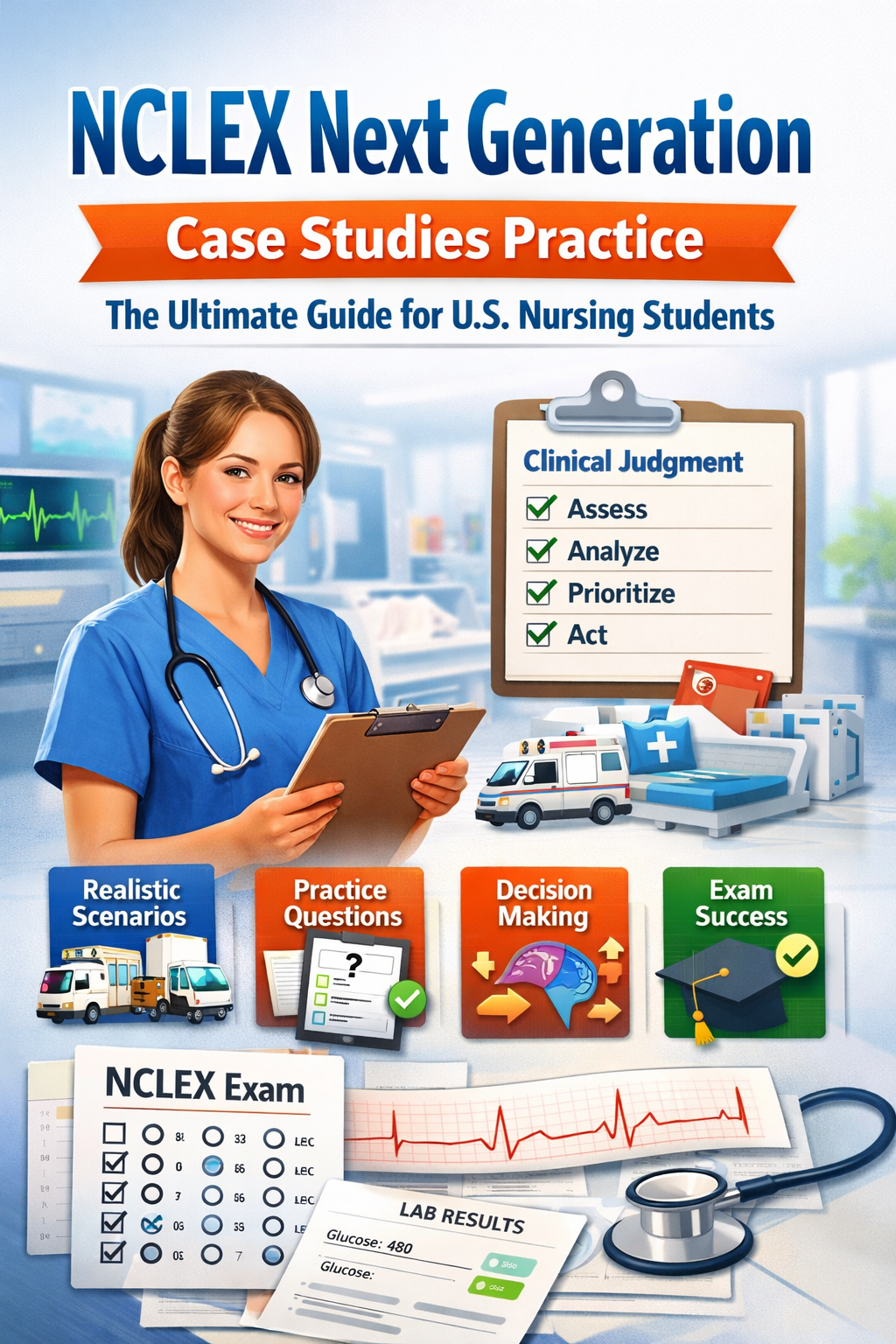
What Is the NCLEX Next Generation?
The Next Generation NCLEX (NGN) was developed to better assess clinical judgment — the core skill nurses use every shift in U.S. hospitals.
- Ongoing client scenarios
- Multiple layers of information (vitals, labs, notes)
- Evolving patient conditions
- Clinical decision-making checkpoints
You must:
- Recognize cues
- Analyze cues
- Prioritize hypotheses
- Generate solutions
- Take action
- Evaluate outcomes
Why NCLEX Next Generation Case Studies Practice Is Critical
- Scenario-Based Testing – You’ll face unfolding cases, not isolated facts.
- Partial Credit Scoring – Understanding reasoning earns points.
- Matrix & Multiple Response Questions – Precision matters.
- Real U.S. Standards – HIPAA, Joint Commission, medication safety protocols.
How to Approach NGN Case Studies
Step 1: Identify the Setting
Med-surg? ER? ICU? Long-term care?
Step 2: Scan for Red Flags
- Abnormal vital signs
- Critical lab values
- Medication contraindications
Step 3: Think ABCs + Safety
Airway • Breathing • Circulation • Neurological status
Step 4: Ask: What Can Kill the Patient First?
CASE STUDY 1: Acute Myocardial Infarction
Client Profile
- 58-year-old male
- Chest pain radiating to left arm
- History: Hypertension, Type 2 diabetes
- Smoker
Vital Signs
- BP: 168/94
- HR: 112
- SpO2: 92%
- Pain: 8/10
Question 1
Which findings are concerning? (Select all that apply)
A. Chest pain radiating to arm
B. BP 168/94
C. HR 112
D. Elevated troponin
E. History of smoking
Question 2
What is the nurse’s FIRST action?
A. Obtain 12-lead ECG
B. Administer morphine
C. Call family
D. Provide discharge education
Matrix Question
| Intervention | Appropriate | Not Appropriate |
|---|---|---|
| Oxygen therapy | ✔ | |
| Aspirin | ✔ | |
| Delay ECG | ✔ | |
| Monitor cardiac rhythm | ✔ |
CASE STUDY 2: Pediatric Respiratory Distress
- 4-year-old with asthma
- SpO2: 88%
- Nasal flaring & retractions
Priority Intervention?
A. Administer albuterol nebulizer
CASE STUDY 3: Post-Operative Complication
- 65-year-old, post hip replacement
- SpO2: 86%
- Calf tenderness
First Action: Call rapid response
CASE STUDY 4: Diabetic Ketoacidosis (DKA)
- Glucose: 480
- pH: 7.28
- Potassium: 5.8
How to Practice Effectively
- Study 3–5 case studies daily
- Review rationales deeply
- Simulate exam conditions (85–150 questions)
- Track weak areas
Common NGN Mistakes
- Rushing through scenarios
- Ignoring lab values
- Forgetting prioritization
- Overthinking simple interventions
High-Yield Topics
- Sepsis
- MI
- Stroke
- DKA
- Heart failure
- OB hemorrhage
- Medication safety
30-Day Practice Plan
- Week 1: Cardiac + Respiratory
- Week 2: Endocrine + Neuro
- Week 3: OB + Pediatrics
- Week 4: Mixed full-length case studies
The NCLEX isn’t trying to trick you. It’s asking one question: “Is this candidate safe to practice in the United States?”
Master structured NCLEX Next Generation case studies practice, and you won’t just pass — you’ll walk into your first nursing job confident and prepared.